
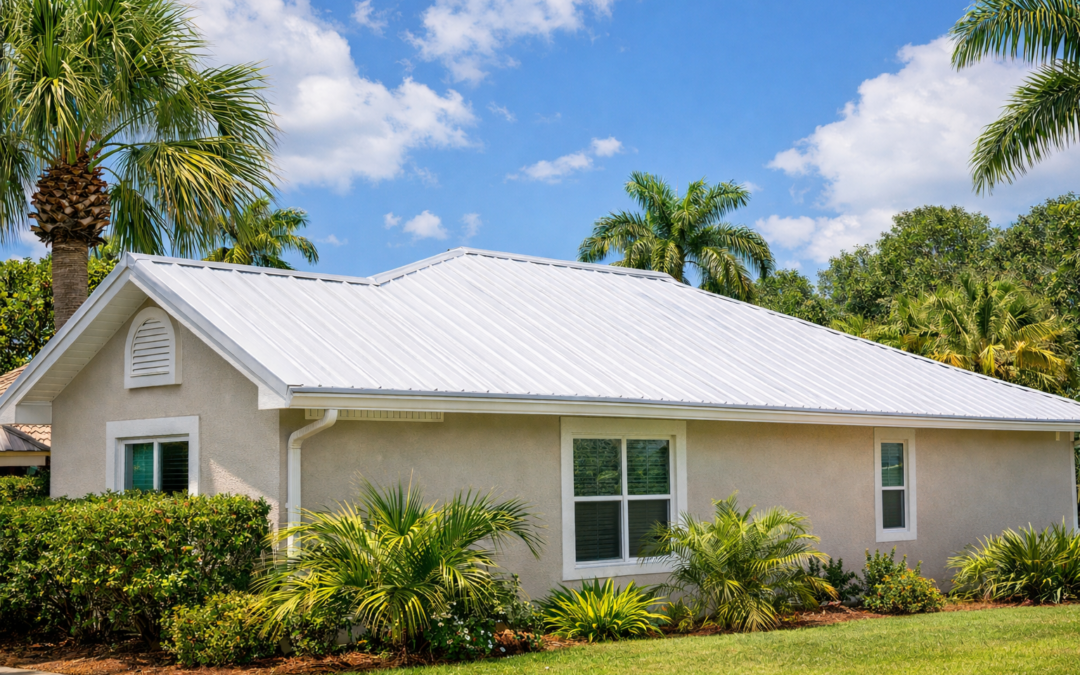
Florida homeowners face intense sun, high humidity, and long cooling seasons. If your energy bills spike every summer, your roof system may be the hidden cause. The most effective way to reduce heat gain and improve indoor comfort is by combining a cool roof with a properly designed attic ventilation system.
Together, these two components create a high-performance roofing system built specifically for Florida’s climate.
A cool roof is engineered to reflect more sunlight and absorb less heat than traditional roofing materials. In Florida, where rooftop temperatures can exceed 150°F in summer, this difference is significant.
How Cool Roofs Work
Cool roofing materials are designed with:
- High solar reflectance (reflects sunlight)
- High thermal emittance (releases absorbed heat quickly)
Common Florida cool roof options include:
- Light-colored metal roofing
- Reflective asphalt shingles
- White or light tile roofing
- Coated flat roofing systems
Benefits for Florida Homes
- Lower attic temperatures
- Reduced HVAC strain
- Lower energy bills
- Improved indoor comfort
- Extended roof lifespan
In many cases, homeowners can reduce cooling costs by 10–20%, depending on insulation levels and home design.
Even with a reflective roof, some heat will still enter your attic. Without proper airflow, that heat becomes trapped and radiates downward into your living space.
Why Ventilation Matters
A balanced attic ventilation system includes:
- Intake vents (usually soffit vents)
- Exhaust vents (ridge vents, box vents, or gable vents)
This continuous airflow:
- Pushes hot air out
- Reduces moisture buildup
- Prevents mold growth
- Protects insulation effectiveness
- Extends shingle life
In Florida’s humid climate, moisture control is just as important as temperature control. Poor ventilation can lead to condensation, wood rot, and premature roof failure.
Why the Combo Works Best
A cool roof reduces the amount of heat entering the system.
Attic ventilation removes the heat that still makes it inside.
If you only install one:
- A cool roof without ventilation can still trap heat.
- Ventilation without reflective materials still allows excessive heat gain.
Together, they form a complete energy-efficient roofing strategy.
Signs Your Home Needs an Upgrade
You may benefit from this combo if:
- Your upstairs rooms are significantly hotter than downstairs
- Your AC runs constantly in summer
- Your attic feels extremely hot or humid
- Your energy bills spike from May through September
- Your roof is 10+ years old
Final Thoughts
In Florida’s climate, your roof does more than keep rain out. It controls heat, humidity, and energy consumption.
If you’re planning a roof replacement or want to improve your home’s efficiency, combining a cool roof system with proper attic ventilation is one of the smartest upgrades you can make.
It’s not just a roof improvement, it’s a year-round performance upgrade.


