
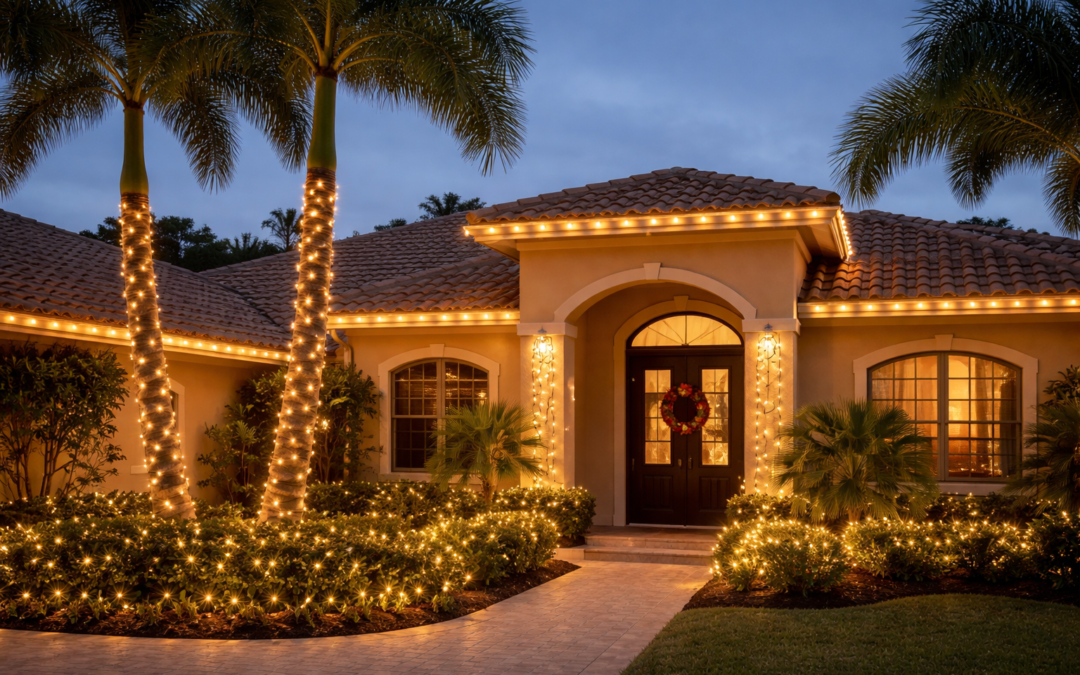
Before hauling any boxes outside, I recommend walking around the entire house first and checking the roof to see where you will be installing your holiday lights. Identify where you want your lights to go: the roofline, gutter lines, wrapping trees around each other, hanging from the sides of bushes, or forming frames around window casings, etc. It may also be helpful to either take pictures or create sketches of your area.
By planning, you will be aware of the total number of light strands and clips you will need, and you will avoid going up and down a ladder due to missing tools you need to complete the project (which will also make everything much easier). Also, while walking around, you may identify areas that could be dangerous during installation (such as leaning too far back to reach a plug-in on the roof, or running into electrical lines).
Next, measure your gutter and peak lines with a tape measure. Use the correct light strand length for the height (most Christmas light strands are approximately 25-50 feet long). Knowing your measurements for these areas will make using a light strand much simpler. Finally, when measuring and mapping your extension cords, determine how they will connect to your outlets, as this can create unnecessary hassle during an outdoor holiday light installation.
How to prevent damage to the roof and shingles!
Avoid Nails and Screws
Avoid using nails or screws to attach lights to the roof or shingles, as these methods can crack shingles and create holes that allow moisture to penetrate, leading to mold, rot, and mildew, and ultimately shortening the life of your roof. Even small holes in a shingle can create big problems, so avoid using these methods entirely!
Use Plastic Light Clips
Using plastic light clips to hold lights on your roof and sidewalk is much easier. These clips require no drilling, puncturing, or roof damage. They hook directly on the edge of your gutters, along the top edge of your shingles, or along the top edge of brick and hold just about all/types of light strands! Many newer light sets now include built-in light clips.
Be Careful when Climbing Onto the roof.
It is very dangerous to walk on the roof, as it can damage your shingles. If you must climb up there, please wear soft rubber-soled shoes, ensure it is a dry day, and consider using a safety harness. Always move slowly and take care to step lightly!
Over time, foot traffic (especially heavy-weighted foot traffic) will eventually crack, loosen, or granulate your shingles. Therefore, if you want lights placed on high, hard-to-reach places, it may be a good idea (and save you money) to hire a holiday light installer to do the installation for you!
Guidelines for Properly Removing Your Holiday Lights
Once the holiday season ends, many people do not want to use ladders or work with electrical cords. For you to be able to take down your holiday lights as easily and stress-free as possible, remember the following:
• Make sure the weather is dry before taking your lights down, so it is easier to maneuver the lights
• Never yank or pull on your light strands when taking them down, as this could cause cracking of the guttering systems or loosening of shingles
• Remove your clips from your holiday lights one at a time with care
• Be sure to coil your lights loosely and store them in a clean, dry place
• Before putting your ladder away, ensure to look at your gutters and rooflines from the very bottom step of the ladder
If you see cracked shingles, bent gutters, or any other issue of concern, take a photo from the ground and contact us. It is easier and less expensive to fix minor roof problems than to address them after they become major repairs.
Spend your time planning, installing, and removing your holiday lights to do the right thing: protect roof integrity, ensure your home’s safety, and make your show shine without incurring costly repairs later.


