
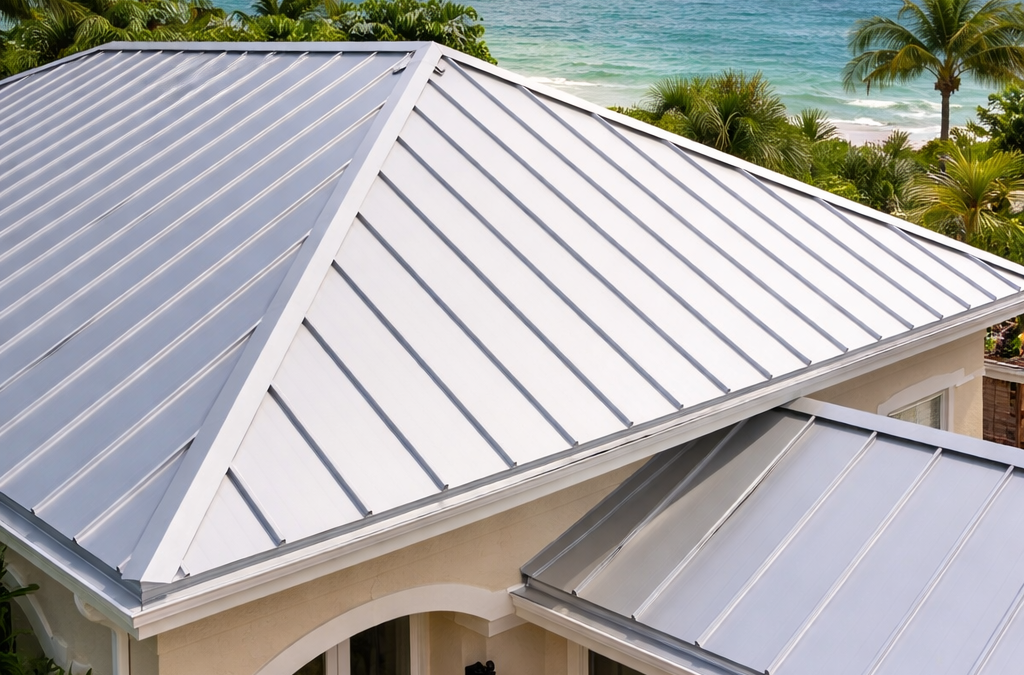
Roofing in Florida must withstand extreme heat, heavy rainfall, high humidity, hurricane-force winds, and proximity to saltwater. Thus, the selection of the right roofing material is not only about aesthetics; it must have good wind uplift resistance, a high impact rating, the desired energy efficiency, and durability in a coastal, tropical environment over the long term.
There are five roofing materials considered the best for the Florida climate, along with their benefits and optimal use.
Asphalt Shingles (Architectural / Dimensional)
Why They Are Appropriate for Florida:
- Rated for wind speeds between 130 mph and 150 mph (varies between manufacturers)
- Readily accessible and reasonably priced
- Repairable after a storm
- Open to algae-resistant options (a must due to the amount of moisture in the air)
Modern architectural shingles are manufactured more efficiently than older 3-tab shingles. Also, many are manufactured using new technologies (advanced sealant strips) to improve the wind uplift rating and prevent water intrusion from heavy rain.
Best Use: For homeowners seeking cost-effective protection and hurricane-resilient performance.
Drawbacks: Compared with tile or metal roofing, shingle roofing has a much shorter lifespan (15–25 years).
Metal Roofing (Standing Seam & Aluminum)
Why They Are Appropriate for Florida:
- Durability against Wind Damage (Common Wind Ratings Over 140 Miles Per Hour)
- Reflects Solar Energy To Reduce Air Conditioning Costs
- Extremely Resistant To Rain Penetration
- Excellent for Coastal Regions with Aluminum Installation
Metal roofs are increasingly popular in Florida for their 40-70-year service life and energy savings. If you’re located near a saltwater body of water, such as the ocean, an aluminum system is ideal for your property because it will not corrode from salt air.
Best Use: High-End Residential Housing and Investment Properties That Will Last a Long Time.
Drawbacks: Higher-weight roof system; must have enough support in your building to carry the load.
Concrete & Clay Tile Roofing
Why They Are Appropriate for Florida:
- Superior resistance to heat and UV damage
- Life expectancy of between 40 and 50 years or more
- Natural resistance to decay due to insects, fungus, etc.
- Heavyweight provides stability in high winds
Tile roofing has become very popular in the South Florida market, particularly for Spanish Mediterranean-style houses. When a roof tile system is installed with modern fastening systems, it can withstand significant wind loads during hurricanes.
Best Use: Large luxury homes as well as long-term investment real estate.
Drawbacks: Tile roofs are heavy; therefore, the roof structure must support their weight.
Modified Bitumen (Flat & Low-Slope Roofs)
Why They Are Appropriate for Florida:
- Adapted for low-slope and/or flat roof types
- Exceptional waterproof protection
- Outstanding reliability against heavy rainstorms
- UV-resistant coating options
Florida residents and commercial property owners use modified bitumen roofing for flat roofs. When installed per the instructions with proper drainage, modified bitumen roofing systems will provide long-lasting, waterproof performance.
Best For: Homes with flat roof sections and commercial properties.
Drawbacks: Requires professional installation and periodic maintenance
Synthetic Roofing (Composite Slate or Shake)
Why They Are Appropriate for Florida:
- Lightweight yet durable
- The appearance of wood or tile roofs
- Good wind resistance
- Mold and moisture resistant
Synthetic roofs combine aesthetics with modern technology, and many are rated Class 4 impact-resistant, specifically designed for hurricane-exposed zones.
Best For: Homeowners who want a premium aesthetic without the weight of real tiles or wood shakes.
Drawbacks: More expensive than asphalt alternatives, but less than natural tile or shakes.
How to Choose the Right Roofing Material in Florida
Here are things to consider when selecting a roof:
- Wind lift ratings;
- Compliance with either Florida or Miami-Dade product approval;
- Energy efficiency;
- Distance from saltwater;
- Post-2026 insurance obligations;
- Budget and lifespan expectations.
You can choose the right roof for your building, location, and future by having a qualified Roofing Inspector assess your roof.


