
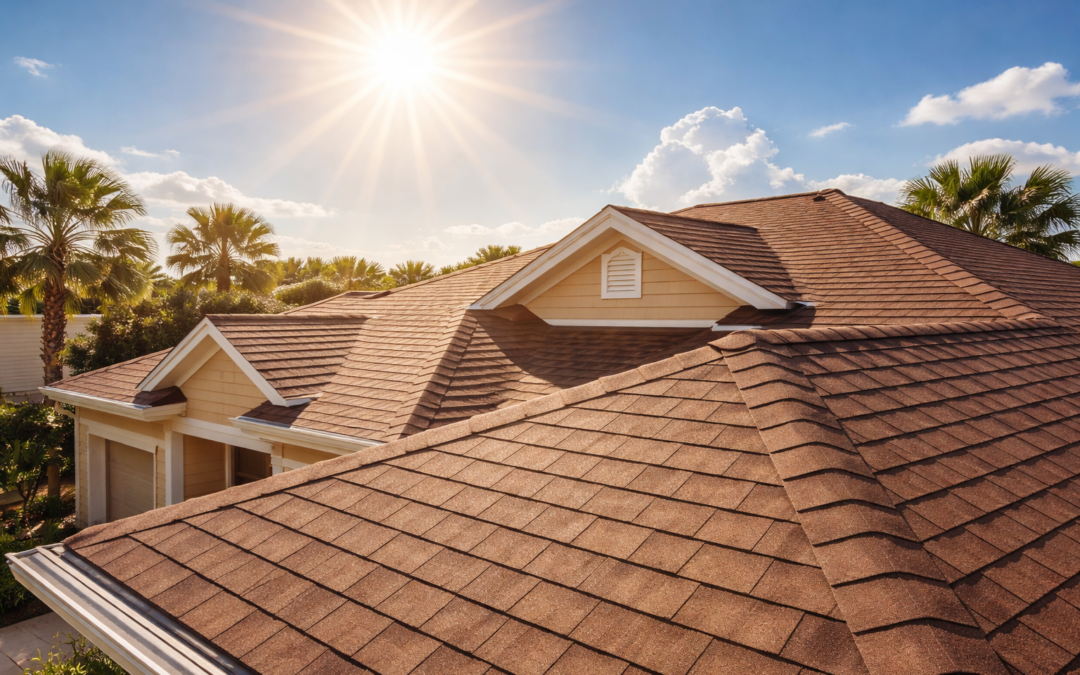
Florida summers bring intense sunshine, high humidity, and sudden afternoon storms. While most homeowners think about hurricanes when it comes to roof protection, the extreme summer heat can be just as damaging over time. Preparing your roof before the hottest months arrive can help extend its lifespan and prevent costly repairs.
How Summer Heat Affects Your Roof
During peak summer months, roof surfaces in Florida can reach temperatures well above 150°F. Prolonged exposure to heat and UV radiation gradually breaks down roofing materials.
Common heat-related roofing issues include:
- Shingle Deterioration
Asphalt shingles absorb a significant amount of heat. Over time, UV rays can cause them to dry out, curl, crack, or lose protective granules. - Thermal Expansion and Contraction
Roofing materials expand during the day and contract at night. This constant movement can weaken seals around flashing, vents, and chimneys. - Increased Attic Temperatures
Without proper ventilation, attic temperatures can rise dramatically. Excessive heat trapped in the attic can warp decking, increase energy bills, and shorten the life of roofing materials. - Sealant and Adhesive Breakdown
Extreme heat can soften roofing sealants and adhesives, reducing their ability to keep shingles and flashing securely in place.
Signs Your Roof May Be Struggling With Heat
Many signs of heat damage can be spotted from the ground if you know what to look for:
- Curling or buckling shingles
- Bald spots where shingle granules are missing
- Discoloration or faded roofing materials
- Warped roof lines
- Higher indoor cooling costs
If you notice any of these warning signs, it may be time to schedule a professional inspection.
Ways to Prepare Your Roof for Summer
A few preventative steps can make a major difference in how well your roof handles Florida’s summer conditions.
- Schedule a Roof Inspection
Professional roof inspections can identify minor issues before they become serious problems during peak heat or storm season.
- Improve Attic Ventilation
Proper ventilation allows hot air to escape from the attic, reducing heat buildup and protecting the roof structure.
- Clean Debris From the Roof and Gutters
Leaves and debris trap heat and moisture against roofing materials, accelerating deterioration.
- Consider Reflective Roofing Materials
Cool roofing materials or reflective coatings can reduce heat absorption and help keep your home cooler.
Don’t Wait Until Peak Summer
Summer heat in Florida can quietly wear down your roof long before you notice visible damage. Addressing small issues now can prevent leaks, structural problems, and higher energy bills later in the season.
A quick roof inspection before the hottest months arrive is one of the simplest ways to protect your home and ensure your roof is ready for the summer ahead.


