
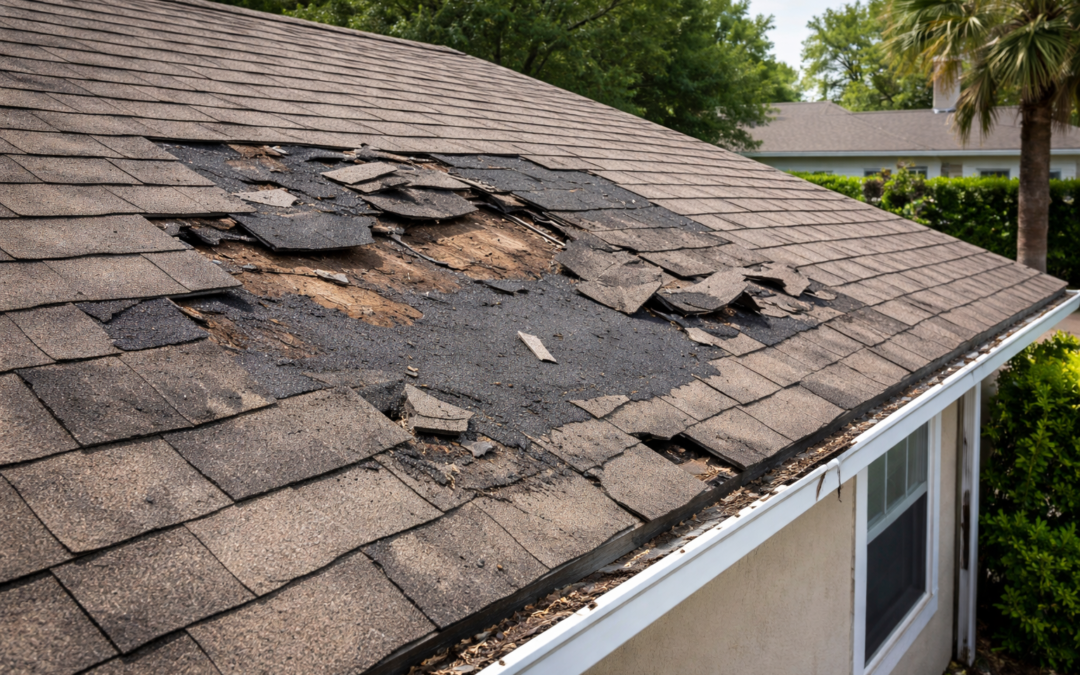
Although cooler months in Florida offer some reprieve from the heat, they can also reveal hidden weaknesses in your roof. Many homeowners are surprised to find roof leaks during the fall and winter, when most attention is focused on hurricane season.
1. Wind-Driven Rain From Cold Fronts
Even without tropical storms, Florida’s winter cold fronts can generate intense, steady rainfall accompanied by gusty winds. This wind-driven rain can be forced under shingles, tiles, and/or flashing—especially if materials are aging or improperly installed. Because these leaks often occur only under specific wind directions, they can be difficult to diagnose.
2. Aging or Brittle Roofing Materials
Cooler temperatures naturally cause older roofing materials, especially asphalt shingles, to contract and become brittle. As a result, cracks in shingles, shifted tiles, or loss of flexibility in sealants around penetrations (such as vents, chimneys, and skylights) may develop. These weaknesses allow water to enter during wet weather events.
3. Clogged Gutters and Poor Drainage
In Florida, fall typically brings falling leaves, pine needles, and debris. As gutters and downspouts become clogged, water can back up behind the gutter system and collect along the roof edge. This standing water increases the potential for leaks at the fascia, soffits, and roof decking—particularly during prolonged rainy periods in the winter months.
4. Flashing and Sealant Failures
Flashing around roof penetrations and transitions is one of the most common sources of leaks year-round. However, problems in these areas are often revealed during cooler months due to temperature fluctuations that cause metal flashing to expand and contract. This movement can loosen fasteners and break seals. Once flashing is compromised, even light rain can allow water to penetrate surrounding materials or enter the building.
5. Flat Roof Ponding After Seasonal Rains
A large percentage of homes and commercial buildings in Florida have low-slope or flat roofs. During seasons when rain events persist for days or weeks and evaporation rates are lower, water can accumulate and create ponding (standing water). Prolonged ponding places stress on roofing membranes and seams, increasing the risk of leaks.
Why Cool-Season Leaks Matter
Roof leaks that appear during the winter months are often signs of underlying issues that will worsen during the summer heat or during hurricane season. Addressing these problems early can help extend the life of your roof, protect your home’s interior, and maintain compliance with insurance requirements—an increasing concern for Florida homeowners.
Proactive Steps to Prevent Leaks
- Schedule a professional roof inspection before and during the cool season
- Clear gutters and roof debris regularly
- Reseal flashing and roof penetrations as needed
- Address minor damage immediately before it spread


